
PTFE (Polytetrafluoroethylene) / Teflon
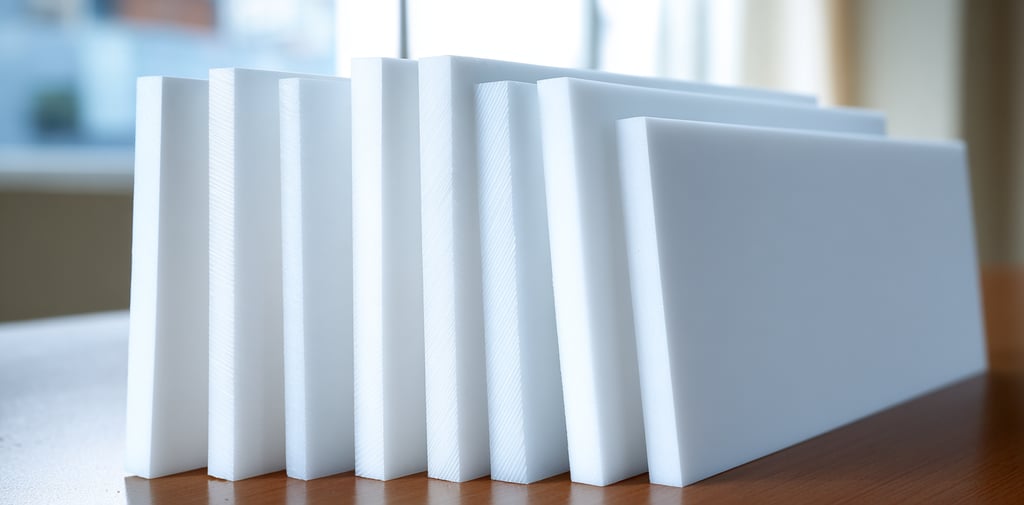
Virgin and filled PTFE available in sheet and rod form. Resistant to virtually all chemicals including HF, rated from -200°C to 260°C. Ready stock in Johor, Malaysia — nationwide delivery available. Ideal for semiconductor, chemical processing, and precision engineering applications.
Lim
5/12/20264 min read
Overview
One of the most remarkable technical materials ever created is polytetrafluoroethylene, commonly referred to as PTFE or by the well-known brand name Teflon. Roy Plunkett, a DuPont chemist, made the initial accidental discovery in 1938. With good cause, PTFE swiftly rose to the top of the list of high-performance materials required in almost every demanding industrial industry.
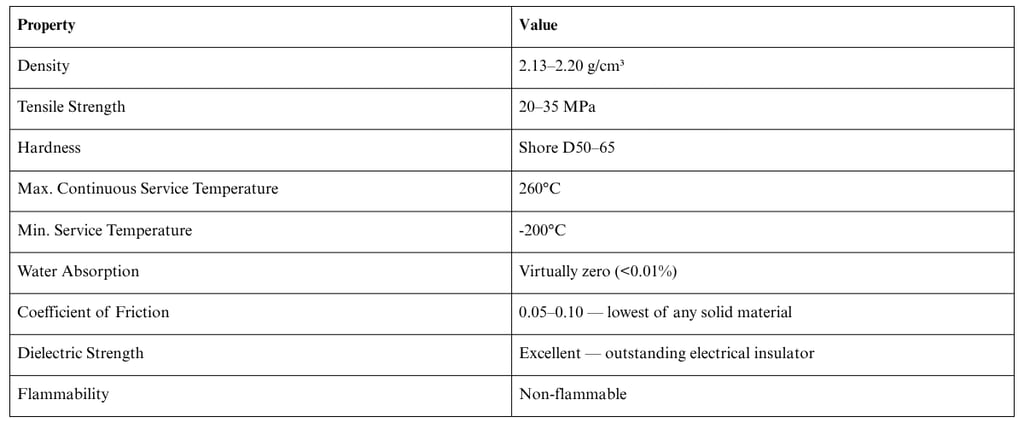
PTFE has the lowest coefficient of friction of any solid material, functions dependably throughout an incredibly broad temperature range, is chemically inert to nearly all known substances, and is an almost perfect electrical insulator. PTFE holds a special and indispensable role in engineering, chemical processing, semiconductor manufacturing, pharmaceutical production, and electrical applications globally because no other material can combine all of these qualities at once.
In Malaysia's rapidly expanding industrial landscape, particularly within the semiconductor, chemical processing, and precision engineering sectors concentrated across Johor, Penang, and Kuala Lumpur. PTFE is among the most consistently demanded high-performance materials. Specified wherever chemical resistance, thermal stability, and non-stick performance are non-negotiable requirements.
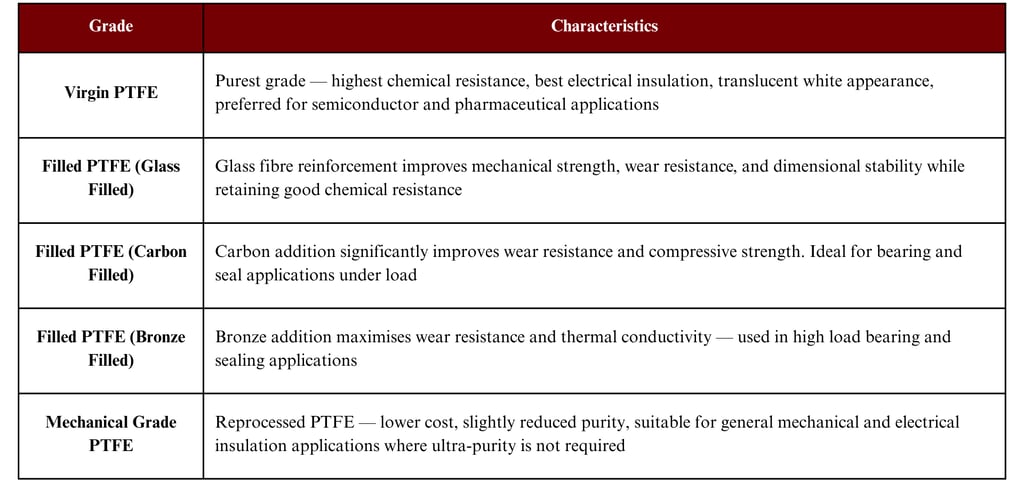
Available Grades
For semiconductor, pharmaceutical, and ultra-pure chemical applications, Virgin PTFE is the only acceptable grade. For mechanical components such as bearings, seals, and wear pads, filled grades offer significantly improved performance under load.
Key Properties
Temperature Resistance
PTFE's temperature performance is virtually unmatched among engineering plastics, making it the only plastic suitable for extreme heat and cryogenic applications simultaneously.
Continuous service temperature: Up to 260°C — far exceeding any other common engineering plastic
Short term peak temperature: Up to 300°C for brief periods
Low temperature performance: Remains fully functional and flexible down to -200°C — one of very few materials rated for cryogenic service
Thermal stability: No melting point in the conventional sense — PTFE transitions to a gel-like state above 327°C rather than flowing like conventional thermoplastics, which is why it cannot be processed by standard injection moulding
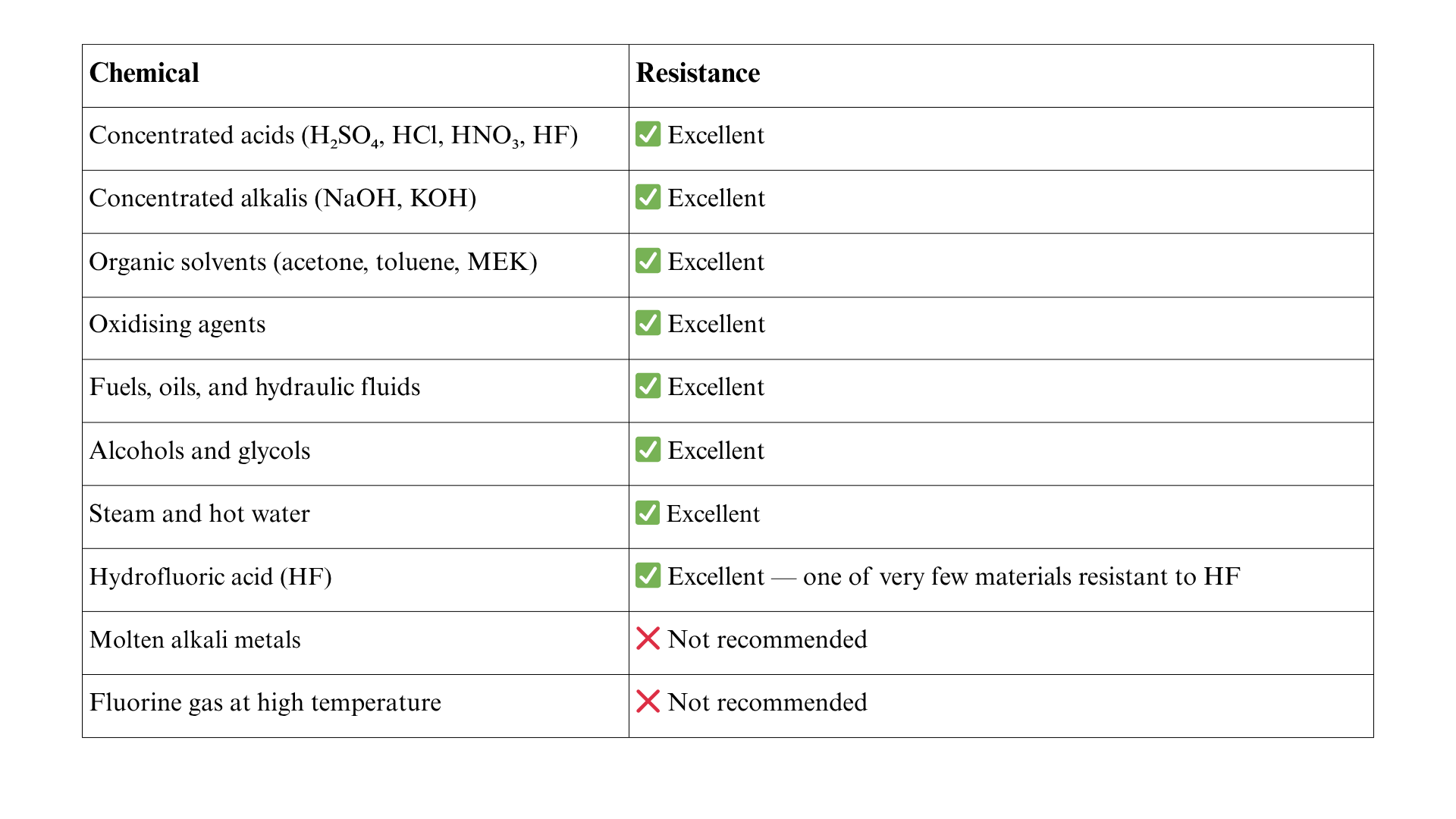
Not recommended for: Applications involving molten alkali metals or fluorine gas at high temperatures — the only chemicals that meaningfully attack PTFE under extreme conditions
Chemical Resistance
PTFE's chemical resistance is essentially unparalleled among solid engineering materials. It is resistant to virtually every known chemical with only the most extreme exceptions.
PTFE is one of the only materials resistant to Hydrofluoric Acid (HF), an extremely aggressive chemical widely used in semiconductor wafer etching processes. This makes Virgin PTFE essentially irreplaceable in certain semiconductor manufacturing applications.
How PTFE Compares to Similar Materials
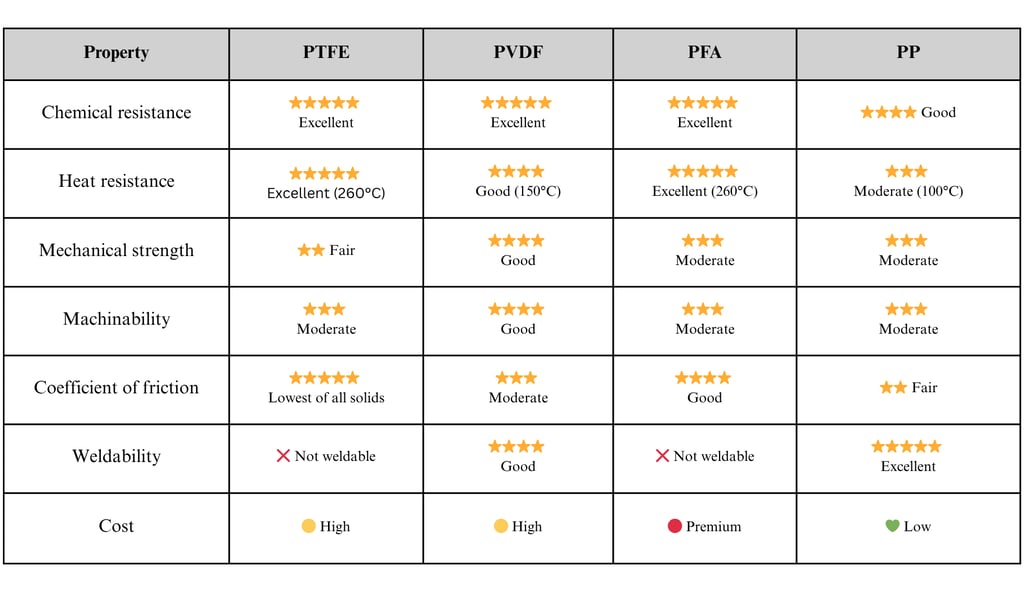
PTFE vs PVDF — Both offer outstanding chemical resistance, but PVDF has significantly better mechanical strength and is weldable into fabricated structures like tanks and piping. PTFE is preferred where the absolute lowest friction, highest temperature resistance, or HF resistance is required. For fabricated chemical handling equipment, PVDF is usually the more practical choice.
PTFE vs PFA — PFA is essentially a melt-processable version of PTFE — offering similar chemical and thermal resistance but with the ability to be extruded and injection moulded into complex shapes. PFA is preferred for tubing, fittings, and complex geometries. PTFE in sheet and rod form is easier to machine into custom components.
PTFE vs PP — PP is the cost-effective workhorse for general chemical handling. PTFE is specified when PP's chemical or temperature limits are exceeded — particularly for strong oxidising acids, HF, or applications above 100°C. The cost difference is significant, so PTFE is reserved for applications where PP genuinely falls short.
Common Applications
PTFE's unique combination of chemical inertness, thermal stability, and ultra-low friction makes it irreplaceable across some of the most demanding applications in modern industry:
Semiconductor manufacturing — wafer handling components, chemical delivery lines, HF resistant fittings, ultra-pure fluid handling, wet bench components
Chemical processing — gaskets, seals, valve seats, pump liners, pipe liners, chemical resistant coatings
Pharmaceutical and food processing — conveyor belts, non-stick contact surfaces, FDA compliant seals and gaskets
Electrical and electronics — wire and cable insulation, printed circuit board substrates, electrical insulation components
Precision engineering — bearings, bushings, wear pads, slide plates, low friction guide surfaces
Laboratory equipment — chemical resistant containers, stirrer bars, tubing, fittings, stopcock plugs
Automotive and aerospace — high temperature seals, gaskets, brake hose liners, fuel system components
Why Choose Us
We stock Virgin PTFE and filled grade PTFE in sheet and rod form across a comprehensive range of sizes, available for immediate dispatch from our Johor base with nationwide delivery. With Malaysia's semiconductor and chemical processing industries driving consistent demand for high-purity PTFE components, we maintain reliable stock availability and offer competitive pricing across all grades.
Whether you need a single piece of Virgin PTFE sheet for a semiconductor jig or a bulk-filled PTFE rod for bearing applications, we are ready to supply with fast turnaround.
📲 Contact us for pricing, availability, and custom sizing.
Pom Metal & Plastic Engineering
Providing reliable industrial materials in Johor Bahru since 1994
Engineering
Service
pommetal@hotmail.com
+607-3535191
Copyright © 2025 Pom Metal & Plastic Engineering. No unauthorised reproduction without permission. All rights reserved.